

No results found

Filters
Get a personalized offer and find out how much you can save.
Enter your email address and we will send you a customized solution.
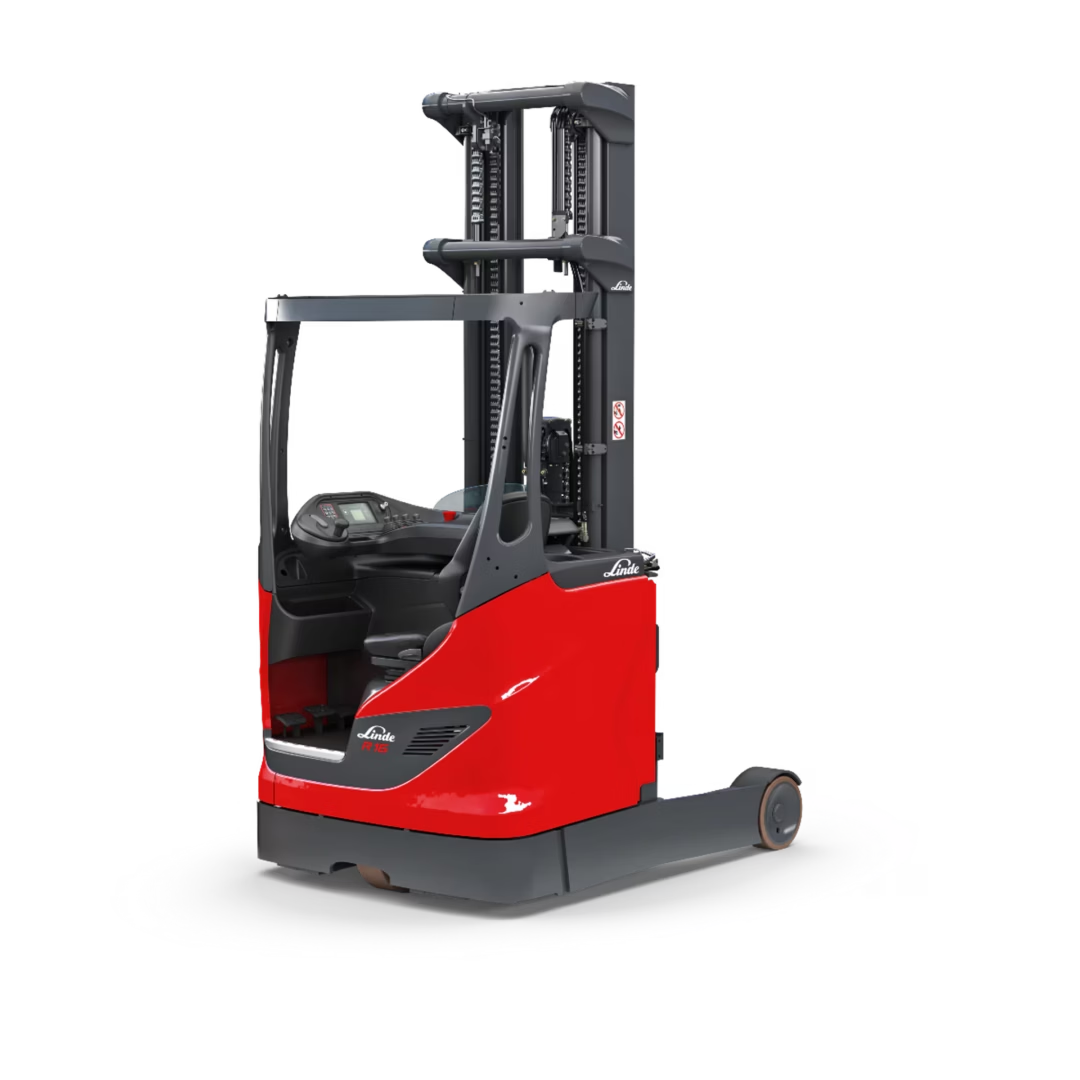
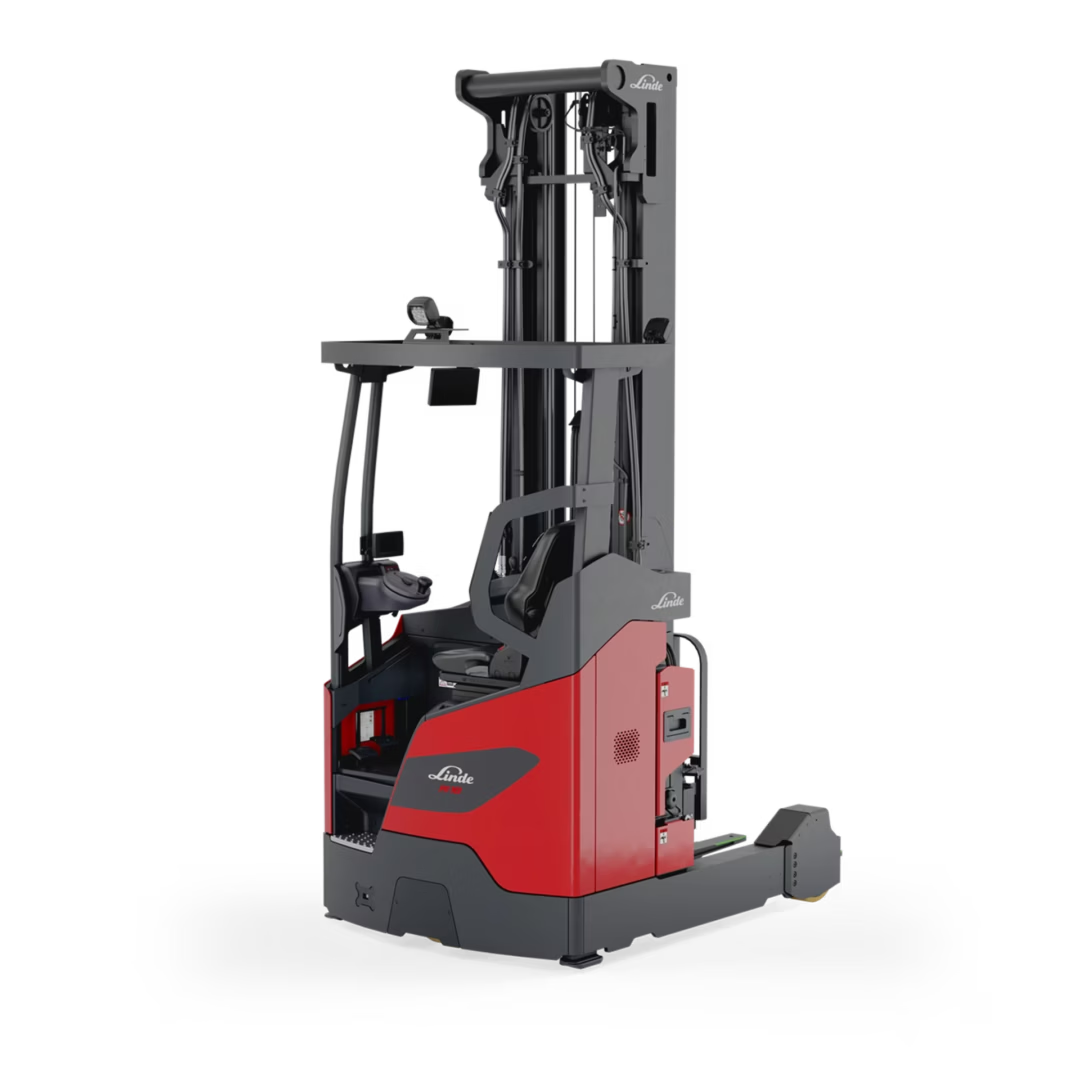
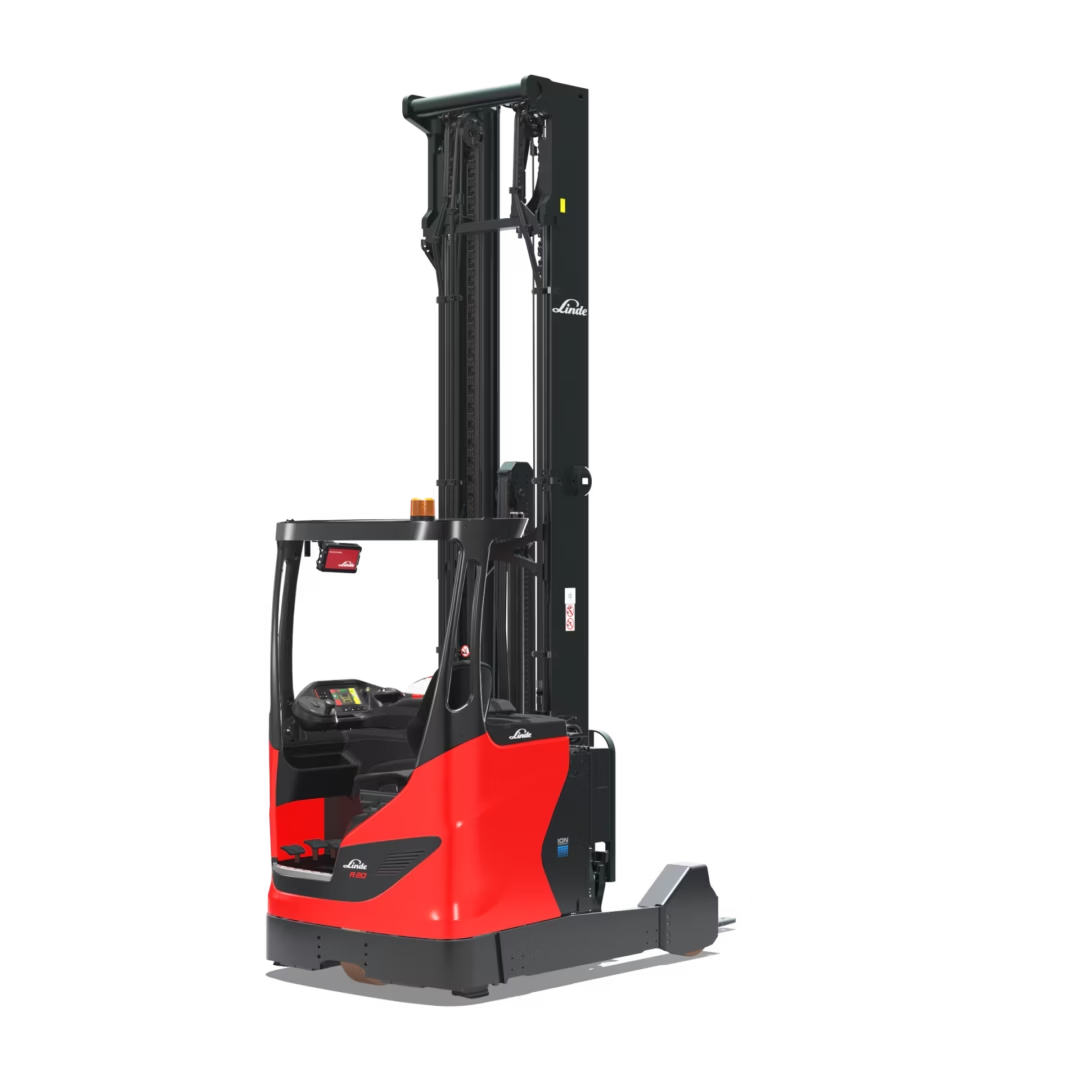
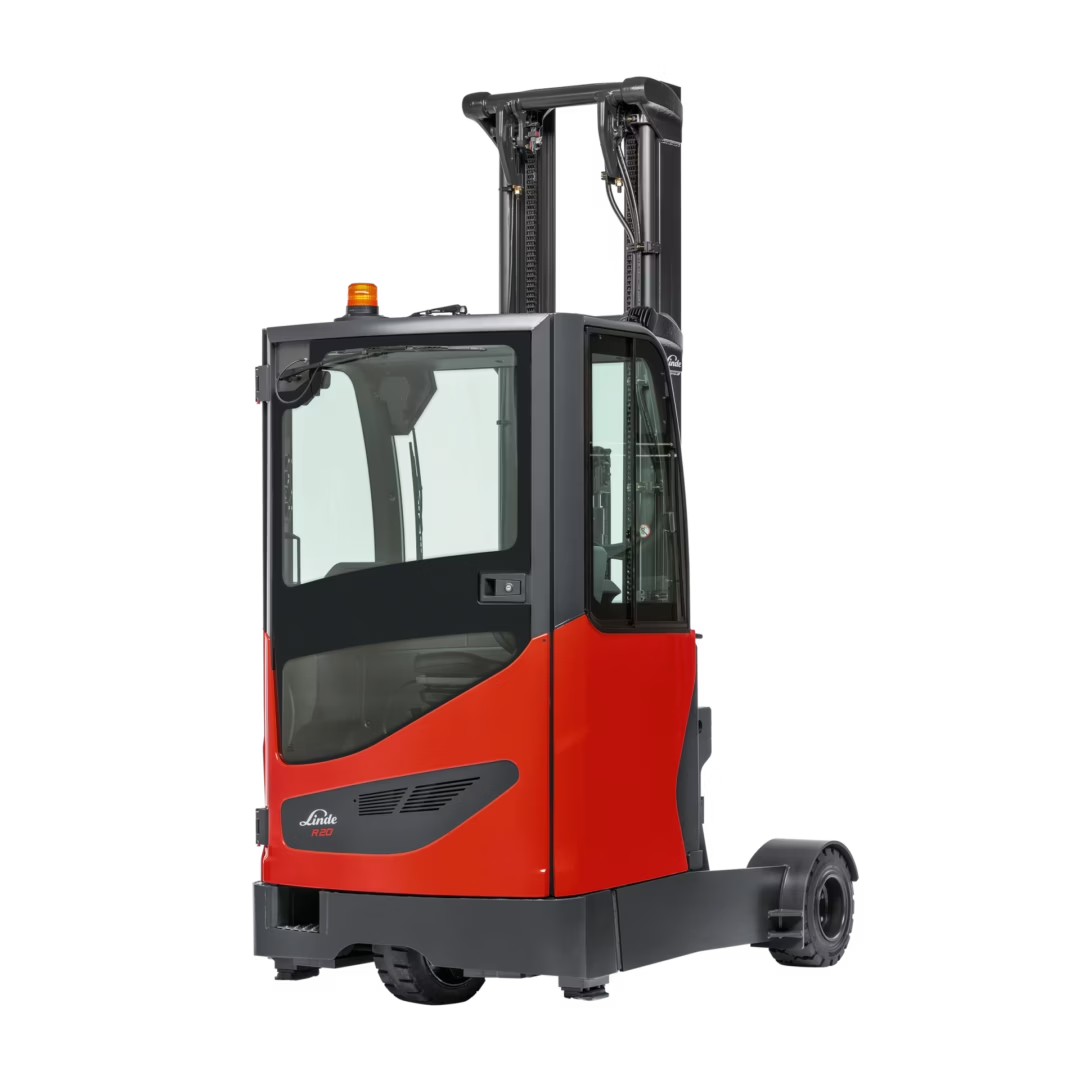
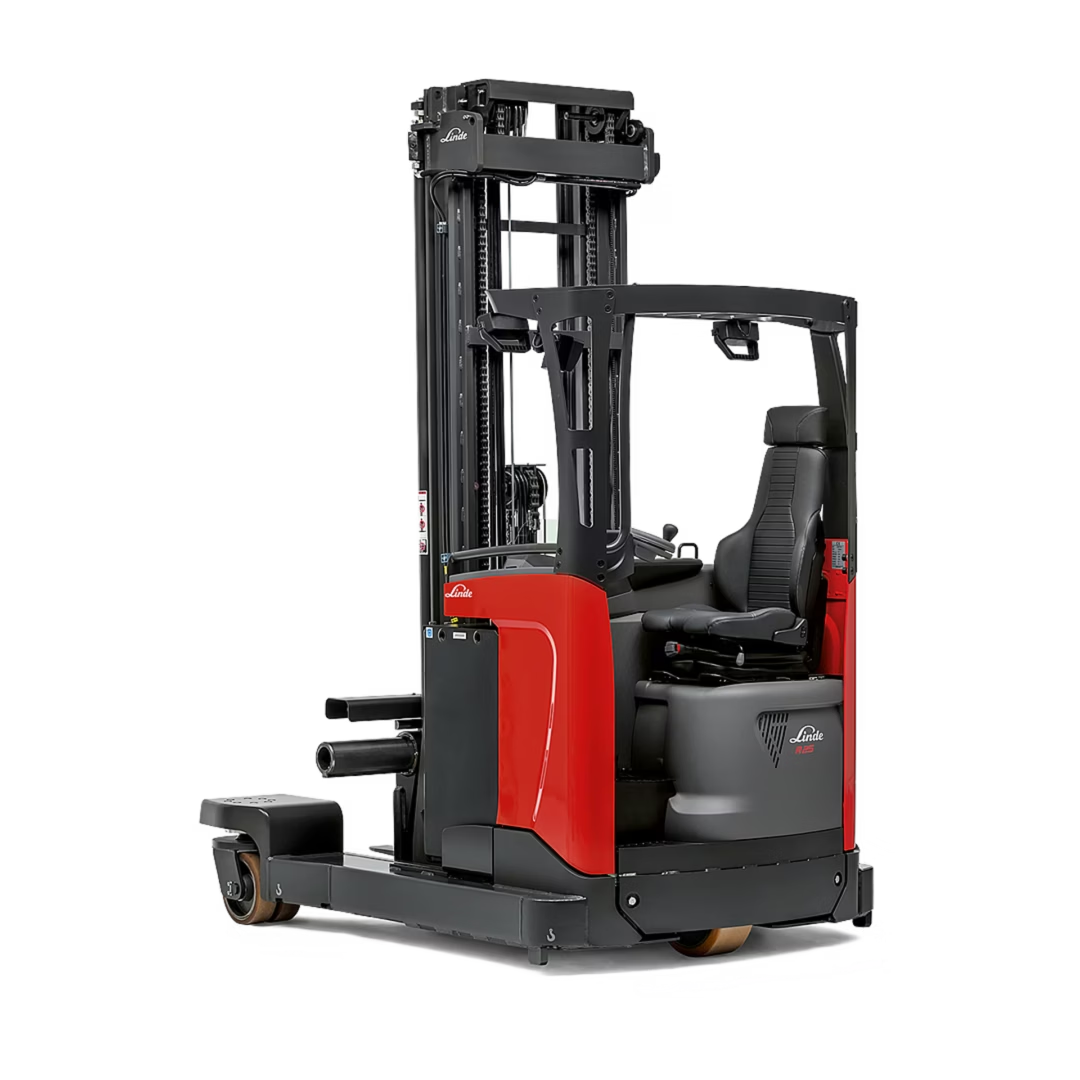
Electric stackers (also known as reach trucks) are electrically powered warehouse equipment designed for lifting pallets onto high storage racks. «Alwark» supplies «Linde Material Handling» R series stackers — from compact models «R10B–R16B» (lifting height up to 7,710 mm, load capacity 1,000–1,600 kg) to higher-class models «R14–R25» (lifting height up to 14,955 mm, load capacity up to 2,500 kg). R series stackers are designed to operate in narrower warehouse aisles where traditional counterbalance forklifts may be less efficient.
What is the difference between a stacker and a forklift?
A forklift is a more versatile type of warehouse equipment used for transporting pallets and lifting loads to medium heights. An electric stacker is better suited for working with high storage racks and in narrower aisles. This type of equipment is commonly used in warehouses where efficient use of vertical space and greater lifting height are important. Many warehouses use both types of equipment: forklifts for loading areas and lower-level operations, and stackers for work in racking aisles.
Which model is required based on lifting height?
For warehouses with racks up to 7.7 m, models «Linde R10B–R16B» or «R14G–R20G» are usually selected. For operations at heights up to 11 m, «Ri14–Ri18» models are designed, up to 12.7 m — «R14–R17X», and for higher racks — «R14–R25» models. When selecting equipment, it is important to consider not only the maximum rack height but also the load weight at a specific height, as load capacity may change as lifting height increases. «R20F–R25F» models can operate at heights of up to 9,650 mm with a load capacity of up to 2.5 tonnes.
Which stacker is suitable for narrow warehouse aisles?
R series reach truck stackers are designed for operation in narrow warehouse aisles because the lifting mechanism extends forward, eliminating the need for additional manoeuvring around the pallet. The required aisle width depends on pallet dimensions, load centre and the design of the specific stacker. «Alwark» technical specialists select the appropriate model based on warehouse layout to ensure safe and efficient equipment operation.
Which battery should be chosen — lead-acid or lithium-ion?
R series stackers can be equipped with both lead-acid (LAB) and lithium-ion batteries. Lead-acid batteries are typically used for single-shift operations and charged during longer breaks, while also requiring a properly ventilated charging area in accordance with EN 50272-3. Lithium-ion batteries allow opportunity charging during operation, making them a common choice for multi-shift work where reducing downtime and battery replacement requirements is important.
Can a used stacker be purchased?
Yes. «Alwark» performs a 40-point inspection for used equipment and provides a warranty of 3 months or 300 operating hours (whichever comes first). Used R series stackers are often selected when warehouse conditions and operational requirements are already established, but investment in new equipment is not necessary. The specific available models depend on current inventory, so offers are provided upon technical request.
Can stackers be rented and what warranty applies?
«Alwark» offers both short-term and long-term stacker rental options. Short-term rental is typically chosen for seasonal demand periods or project work, while long-term rental (12–60 months) usually includes preventive maintenance and, if required, replacement of the stacker in case of breakdown. New equipment is covered by the manufacturer’s «Linde» warranty. Spare parts are generally covered by a 6–12 month warranty, while individual components may have a warranty period of up to 5 years. Service work is covered by a 6-month warranty. Service support is available throughout the Baltic market through regional service centres.